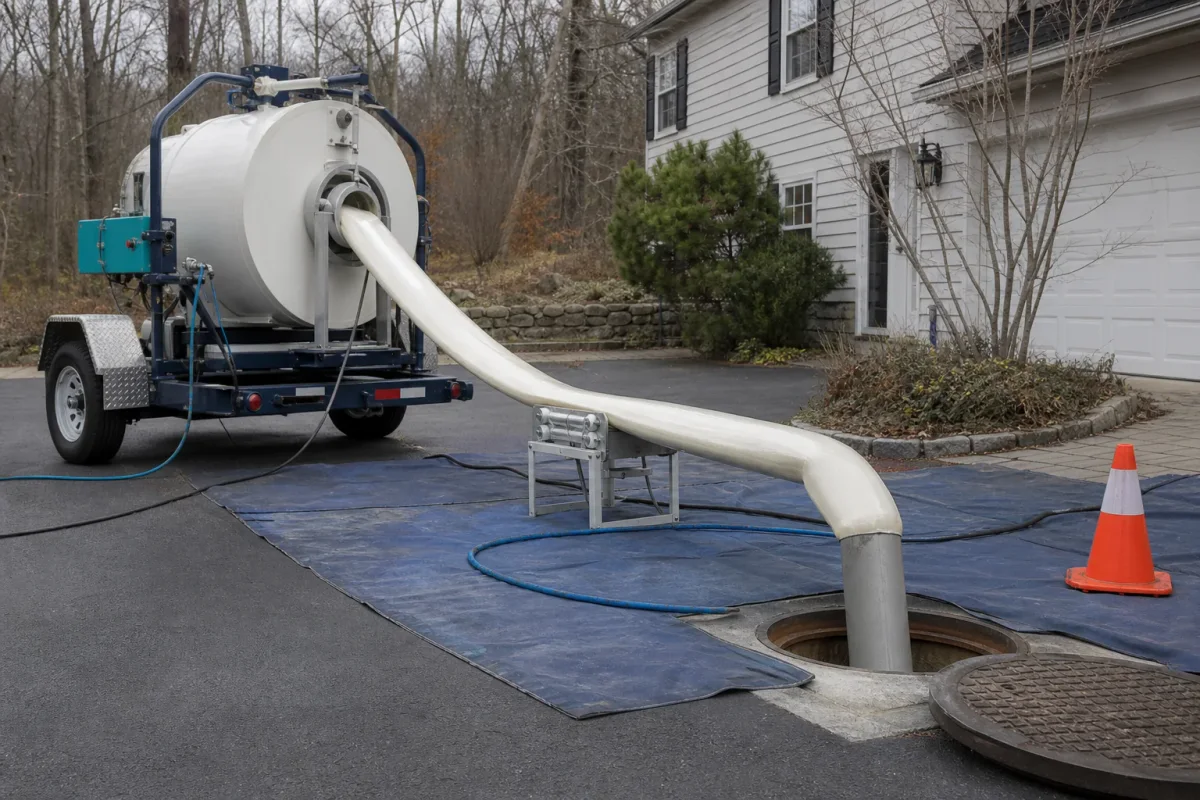
Fairfield Premier Trenchless recommends treating the buried wastewater route as its own purchase question. A general home inspection may review visible plumbing and signs of drainage trouble without surveying the full private sewer lateral or the piping to a septic tank. The buyer should confirm the actual scope rather than assume the underground line was included.
The objective is not to predict every future repair. It is to identify the system type, inspect the accessible route, locate material changes and defects, record every limitation, and translate the findings into a comparable scope before the relevant contingency or decision period closes.
Confirm whether the property uses sewer or septic
Start with the seller disclosure, utility or sewer bill, municipal connection records, septic permits, maintenance history, and any as-built drawing. Fairfield County includes public systems, limited sewer districts, and towns where private septic systems are the norm, so the town or street name is not enough.
The Connecticut residential property disclosure form separately identifies public sewer, septic, cesspool, or another system and asks about known problems and maintenance. Use that as one record, then compare it with current authority files and property evidence.
For a possible septic property, the Connecticut DPH home buyer’s guide recommends collecting the as-built drawing, maintenance records, local health department file, and information about repairs and system performance. The guide also distinguishes the building sewer, tank, and soil treatment components, which is important because a camera pass through the house sewer does not evaluate the complete septic system.
Use the Fairfield County sewer-or-septic guide when records conflict or the parcel sits near a district boundary.
Define the camera scope before the appointment
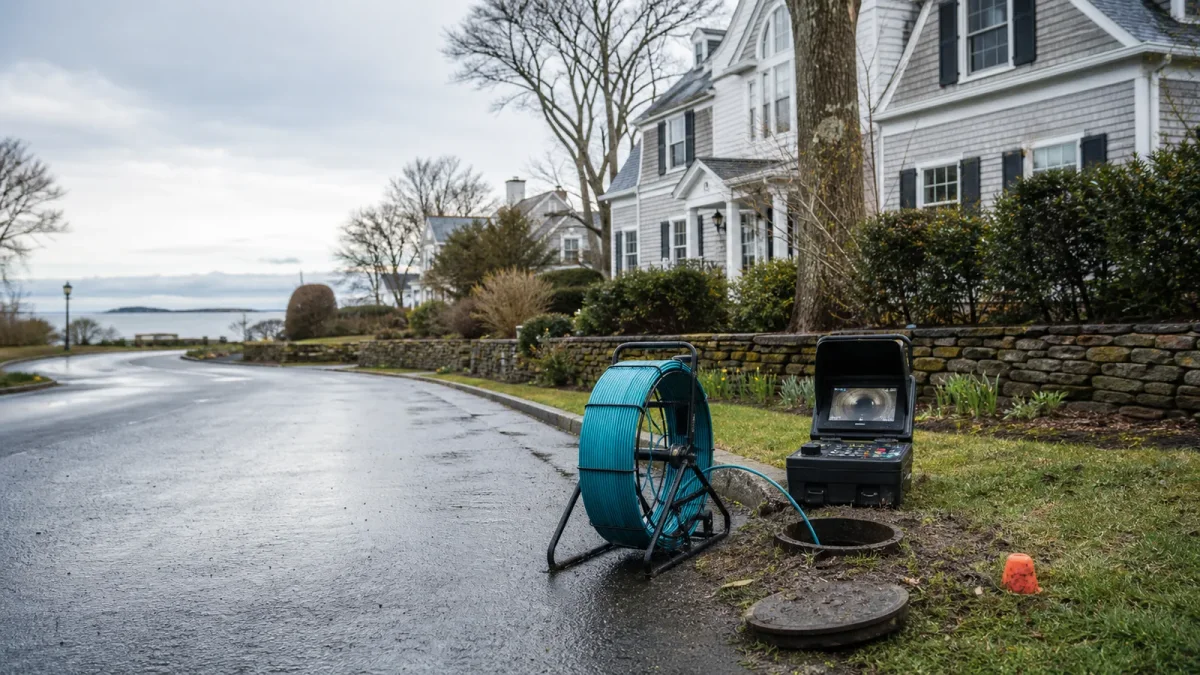
Ask where the camera will enter, which direction it will travel, and what endpoint the inspection aims to reach. A basement cleanout, exterior cleanout, pulled fixture, roof vent, or septic access can create different routes and limitations.
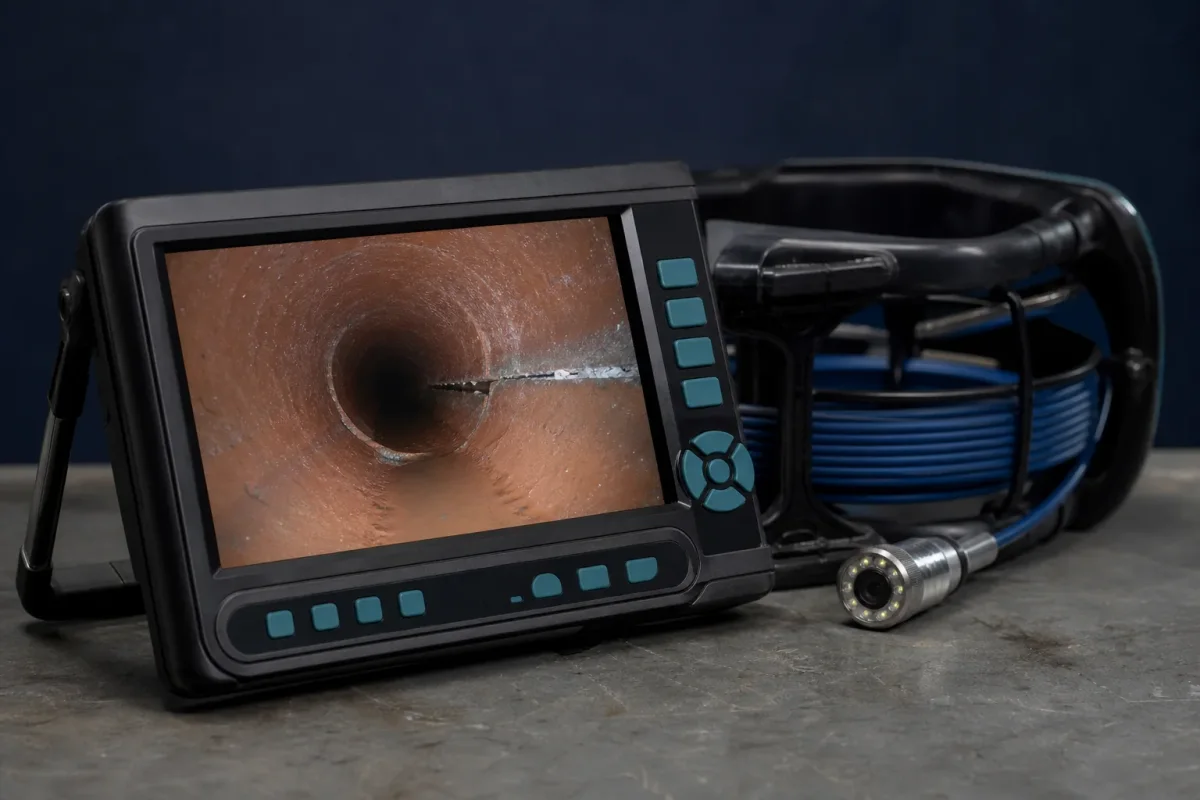
The report should name the access point, establish distance zero, and record material, diameter, transitions, branches, fittings, roots, deposits, corrosion, cracks, offsets, deformation, standing water, and the final point reached. The NASSCO building sewer and drain inspection program uses a consistent approach and condition coding for private building sewers and drains. A buyer’s report can be simpler, but it should still connect each observation to a location and defined term.
Ask whether basic cleaning is included or whether a blocked or dirty line will stop the survey. If cleaning might be needed, the agreement should state who authorizes it, what method is appropriate for the suspected pipe, and whether a second pass will be recorded.
Treat every access limit as a finding
A camera may stop at a trap, sharp turn, heavy roots, deposit, collapse, offset, submerged section, or inaccessible cleanout. The stopping point is not a minor footnote. It defines how much of the buried route remains unseen.
The report should state the distance, visible reason, and next step needed to continue. That might be cleaning, locating, another access point, a preliminary spot repair, or a separate septic inspection. If the endpoint cannot be identified, the report should not imply that the public connection or tank was reached.
An unseen section can affect repair length, access, price, permits, and negotiation. Keep the limitation visible in any estimate. A proposal that assumes the remaining pipe is clear should label that assumption.
Read the footage as a route, not a highlight reel
Request the full original recording. Screenshots can document key frames, but they cannot show continuity, conditions on both sides, or whether the camera passed the defect. Use the distance counter only after confirming its zero point and direction.
Separate removable conditions from structural conditions. Roots, grease, scale, and debris may obstruct the opening, while cracks, missing wall, severe deformation, or collapse raise different questions. Cleaning can expose the wall where appropriate, but it should have a stop condition if the pipe appears fragile.
Standing water should be described carefully. Video can show water, but it does not by itself measure precise slope or reveal soil support. If a belly or grade correction drives a large repair recommendation, ask what additional measurements support the conclusion and what the proposed method will actually change.
The camera inspection field note provides a distance-based template for organizing the recording and defect map.
Convert findings into comparable scopes
If repairs are recommended, ask each proposal to use the same defect locations and treatment limits. Compare inspection and cleaning, exact length and diameter, material, access, branch and transition work, permits, service downtime, utilities, restoration, and closing evidence.
A pre-purchase sewer inspection can support a negotiation only when the proposed remedy matches the observed condition. A liner should not be priced as if it corrects every geometry problem. A pipe-bursting proposal should include launch and receiving access and explain route constraints. A spot repair should locate the isolated defect and state what remains outside its length.
Avoid turning the inspection into a product election. A buyer needs the defect, consequences, reasonable options, and limits. Method selection can follow once the route is understood.
Coordinate timing without compressing the evidence
Purchase deadlines can be short. Schedule the inspection early enough to allow cleaning, another access point, authority records, or a repair comparison if the first pass is incomplete. A same-day conclusion is not useful when the line was only partly visible.
Share relevant property records with the inspector before the appointment. An as-built drawing, prior repair invoice, cleanout location, or municipal connection permit can prevent time being spent on the wrong route.
If a significant condition appears, ask the appropriate real-estate and legal professionals how the finding affects the transaction. The technical report should remain focused on observed piping, access, repair scope, and uncertainty rather than giving contract advice.
Keep the evidence with the property file
Save the disclosure, utility or septic confirmation, permits, as-built drawings, maintenance records, full video, written defect map, estimates, and correspondence used to resolve system type. If work is completed before closing, add material records, permit or inspection documents, photographs, and a final camera pass through the treated segment.
Use filenames that include the property, date, and inspection stage. A future owner or maintenance provider should be able to distinguish the original survey from a post-cleaning or post-repair video.
If the current inspection is partial or the proposals cannot be compared on the same scope, request a pre-purchase review before the decision deadline.
Common Questions
Is a sewer camera inspection normally part of a standard home inspection?
Scopes vary. Buyers should confirm in writing whether buried private piping is included, what access will be used, and how far the camera is expected to travel.
What if the camera cannot reach the public connection or septic tank?
The report should identify the stopping point and reason. The unseen section remains a limitation and may justify another access point, cleaning, locating, or a separate evaluation.
Can a sewer video determine whether a property is on septic or public sewer?
Footage can support the answer if it reaches a recognizable endpoint, but buyers should also verify utility, disclosure, permit, and local health or sewer authority records.
Which files should a buyer keep after closing?
Keep the disclosure, utility or septic records, full camera video, written defect map, estimates, permits, and any repair closeout evidence with the property documents.