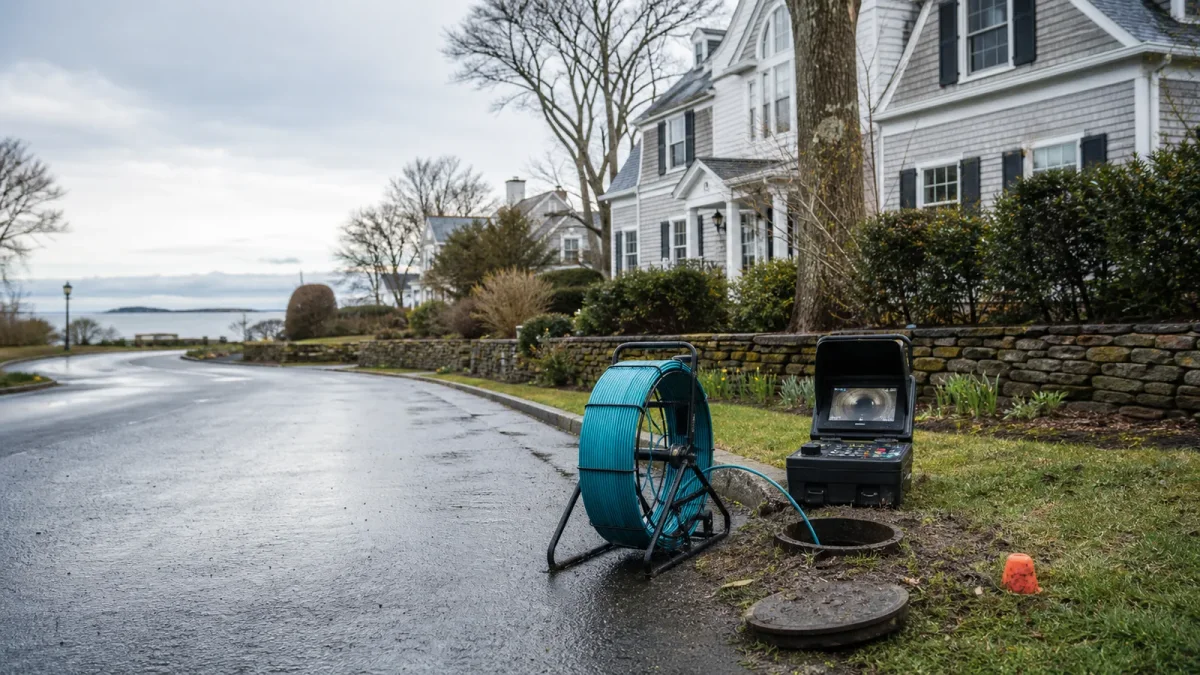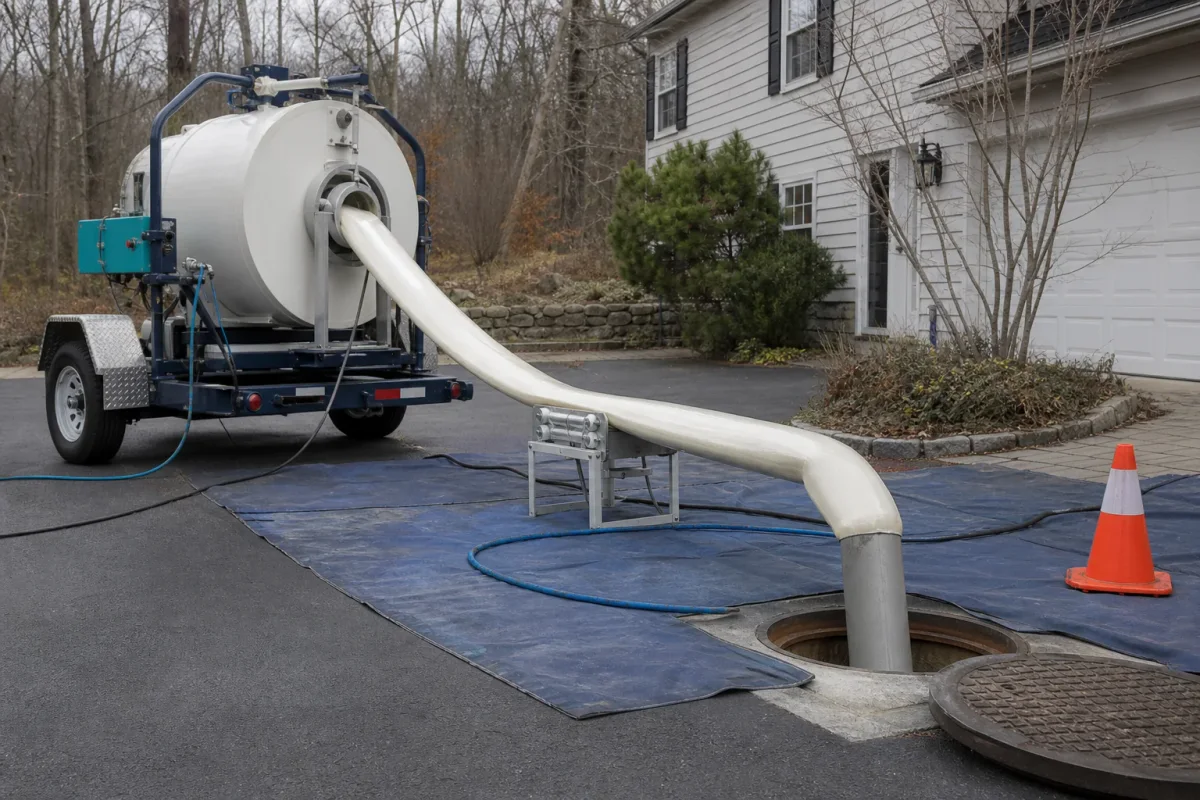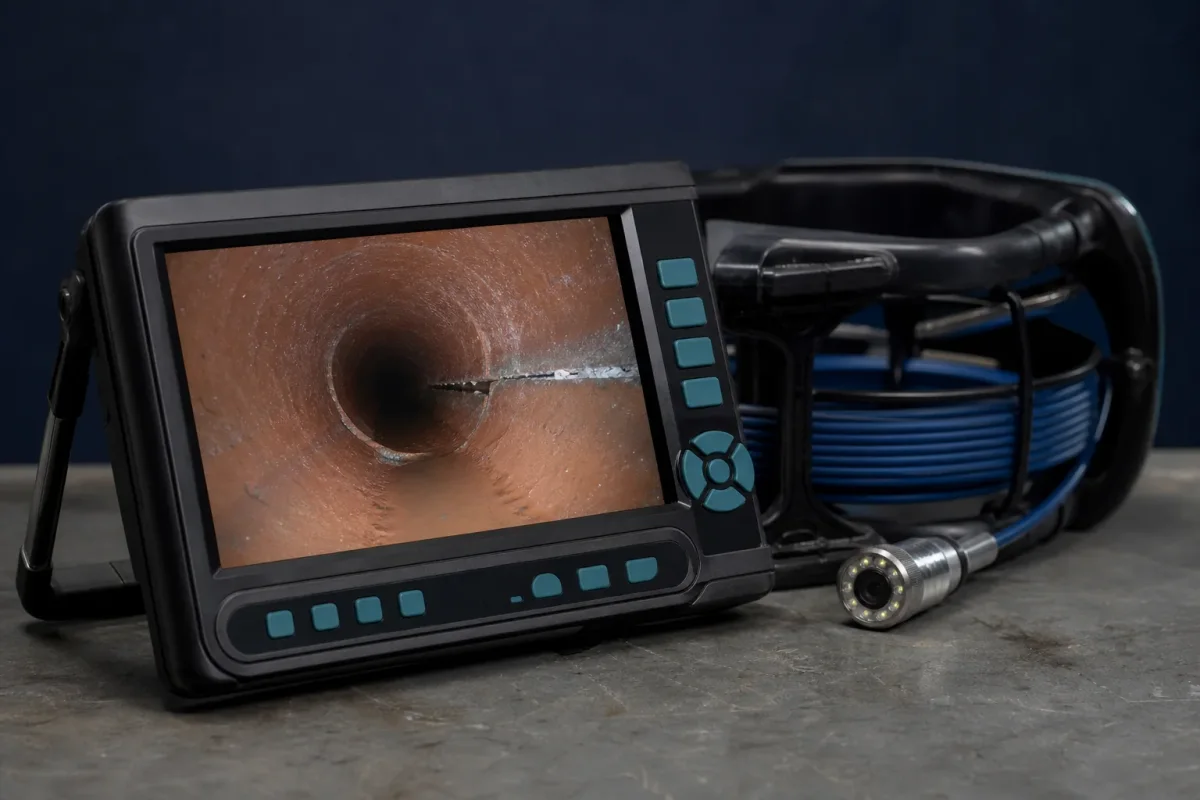
Fairfield Premier Trenchless approaches a cast iron sewer decision as an evidence problem, not a reaction to one dark or dramatic camera frame. Older cast iron often carries scale, grease, rust products, and settled debris that narrow the opening and conceal the surface. The meaningful question is what remains after appropriate preparation, where that condition occurs, and whether the proposed repair addresses the complete defective segment.
Start with a record that can be compared
A useful inspection begins at a named access point and records direction, distance, diameter, and material. The video should identify every transition, branch, fitting, obstruction, area of standing water, and point where the camera could not continue. A distance counter is helpful only when the operator establishes where zero is and keeps the footage continuous enough to relate observations to the property.
Consistent condition language also matters. NASSCO’s assessment programs use defined codes so pipe observations can be recorded and compared instead of described only as bad or old. A residential report does not need to reproduce a municipal asset database, but it should still distinguish deposits, roots, fractures, deformation, corrosion, connections, and access limits.
The initial pass is a baseline. It shows the present opening and the locations that require closer evaluation. It is not automatically the final statement about the cast iron wall.
Separate removable scale from structural loss
Scale is material attached to the inside of the pipe. Channeling is loss or deterioration concentrated along the invert, where wastewater normally flows. The two can appear together, but they are not interchangeable. A thick layer of deposits may make an intact section look severely narrowed, while cleaning may reveal a usable wall. In another section, deposits may be hiding deep corrosion or an opening at the invert.
Preparation therefore needs a stated purpose. The scope should say how the line will be cleaned, how the method is adjusted if the wall proves fragile, and what condition will trigger a stop. Hydro jetting and mechanical tools can remove different materials, but aggressive cleaning is not a substitute for judgment. The goal is a surface that can be evaluated and, if lining is selected, prepared to the installation requirements.
A second camera pass after cleaning should cover the same route as the first. Comparing the two helps separate a maintenance obstruction from a structural defect and prevents a recommendation from resting on a view that was never clear.
Read geometry before choosing a rehabilitation method
Cast iron pipe lining creates a new flow surface within an existing route. That makes geometry central to the decision. The line must remain accessible, the installation equipment must be able to reach the segment, and the prepared opening must support the selected liner design. Tight fittings, severe diameter changes, a trap, a collapse, or a badly offset joint can change or eliminate that option.
Standing water needs careful interpretation. A camera can show that water is present, but video alone does not provide a precise slope survey or reveal the soil supporting the pipe. A liner follows the host route, so it should not be presented as a method that automatically corrects a belly. If grade is the deciding issue, the scope needs evidence beyond a moving camera image and an explanation of what the chosen method can and cannot change.
The current ASTM description for F1216 cured-in-place rehabilitation treats CIPP as reconstruction through installation and curing of a resin-impregnated tube within an existing conduit. That standard context is useful because it reinforces that material selection, dimensions, installation, and curing are part of an engineered system, not just a coating applied to any pipe in any condition.
Inspect every transition and connection
Fairfield County laterals can contain more than one material because of original construction, additions, past spot repairs, or a partial replacement near the foundation or street. Cast iron may connect to clay, Orangeburg, or plastic. Each transition can introduce a change in diameter, alignment, joint shape, or structural condition.
The written scope should locate those junctions and state whether they fall inside or outside the treated length. If a connection is offset, broken, or inaccessible, the proposed repair should explain how it will be handled. A limited sewer spot repair may sometimes be part of a broader rehabilitation plan when one local defect prevents access to an otherwise usable run.
Branches and fittings require the same clarity. Ask how active connections will be identified and reopened if the selected lining system covers them. A final video should show that the intended path and connections are open. Without that closing record, it is difficult to compare the completed work with the original defect map.
Compare lining, coating, spot repair, and replacement honestly
Not every interior pipe product provides the same structural result. A thin epoxy pipe coating and a structural CIPP liner should not be described as if the terms were interchangeable. The quote should name the system, intended function, design assumptions, finished dimensions, preparation requirements, curing or application process, and conditions that fall outside the proposal.
If the pipe has a local defect but a serviceable surrounding run, a spot repair may be evaluated. If it is collapsed, severely deformed, missing, or inaccessible across a longer segment, replacement may be the clearer option. The decision should follow the defect map rather than a preference for one product.
Compare complete scopes instead of method labels. Include access work, cleaning, debris removal, bypass or downtime planning, connection treatment, permits or inspections, surface restoration, pre-work evidence, and post-work verification. A lower method price can become a higher total scope when essential preparation or restoration is excluded.
Keep an evidence package for the property
Retain the full initial video, not only selected screenshots. Add the post-cleaning pass, a written list of defects with distances, material and diameter notes, the accepted scope, product and design documentation, applicable permit or inspection records, and the final camera file. These records help a future owner or evaluator understand what was observed, what was treated, and what remained outside the work.
If the camera never reached the full run, preserve that limitation in the report. If an area could not be cleaned safely, say so. Uncertainty recorded at the time is more useful than a confident conclusion unsupported by the footage.
For an existing recording, begin with the sewer camera inspection guide. If the material, distances, and transitions are not clear, request a scope review before comparing repair proposals.
Common Questions
Does heavy scale mean a cast iron sewer must be replaced?
Not by itself. Deposits can hide the wall and reduce the opening, so the pipe should be cleaned to a level appropriate for its condition and inspected again before the remaining structure is judged.
Can a liner fix a missing section of cast iron pipe?
A liner needs a continuous, accessible path and a scope designed for the actual defect. A missing, collapsed, or badly deformed section may require a spot repair or replacement before lining can be considered.
Why do cast iron transitions matter?
Connections to clay, Orangeburg, PVC, traps, fittings, and the public-side connection can change diameter or alignment. Those locations can affect cleaning, liner installation, and the completeness of the finished scope.
What records should be included after cast iron lining?
Keep the original inspection, the post-cleaning inspection, the written defect and dimension notes, the liner design and material records, and a final camera pass showing the treated segment.