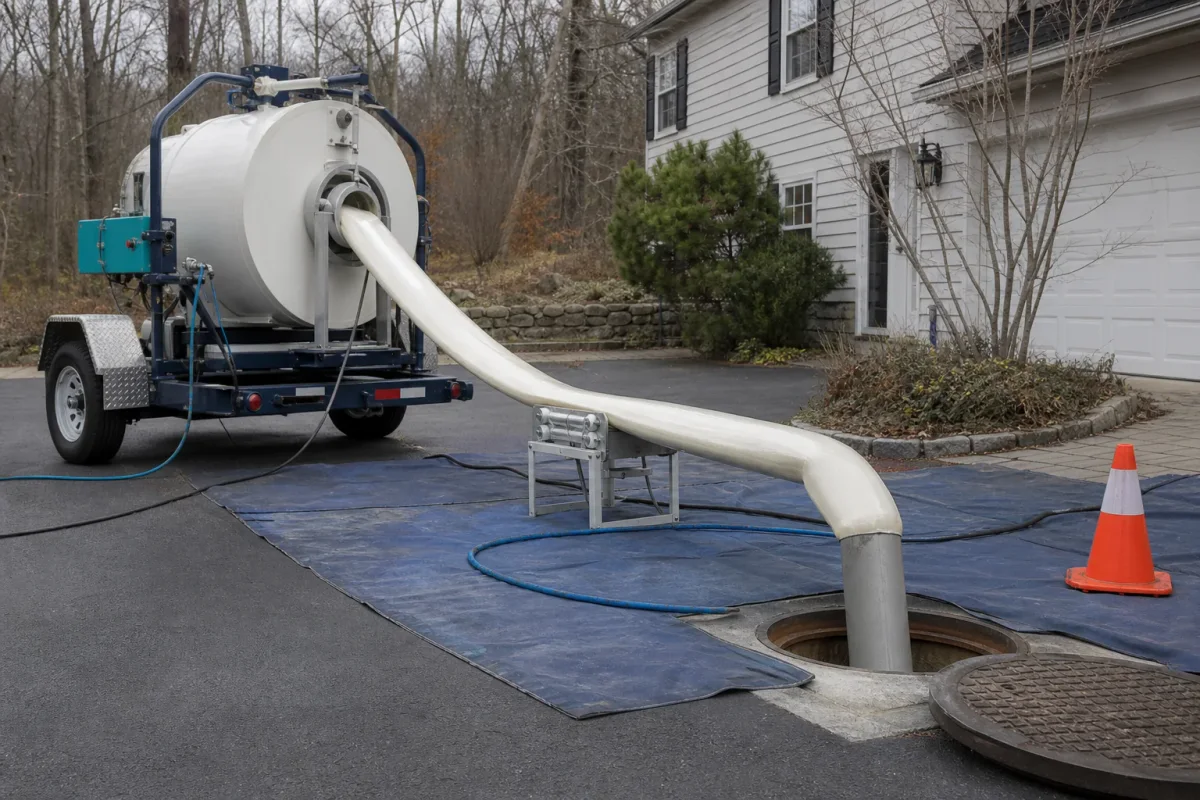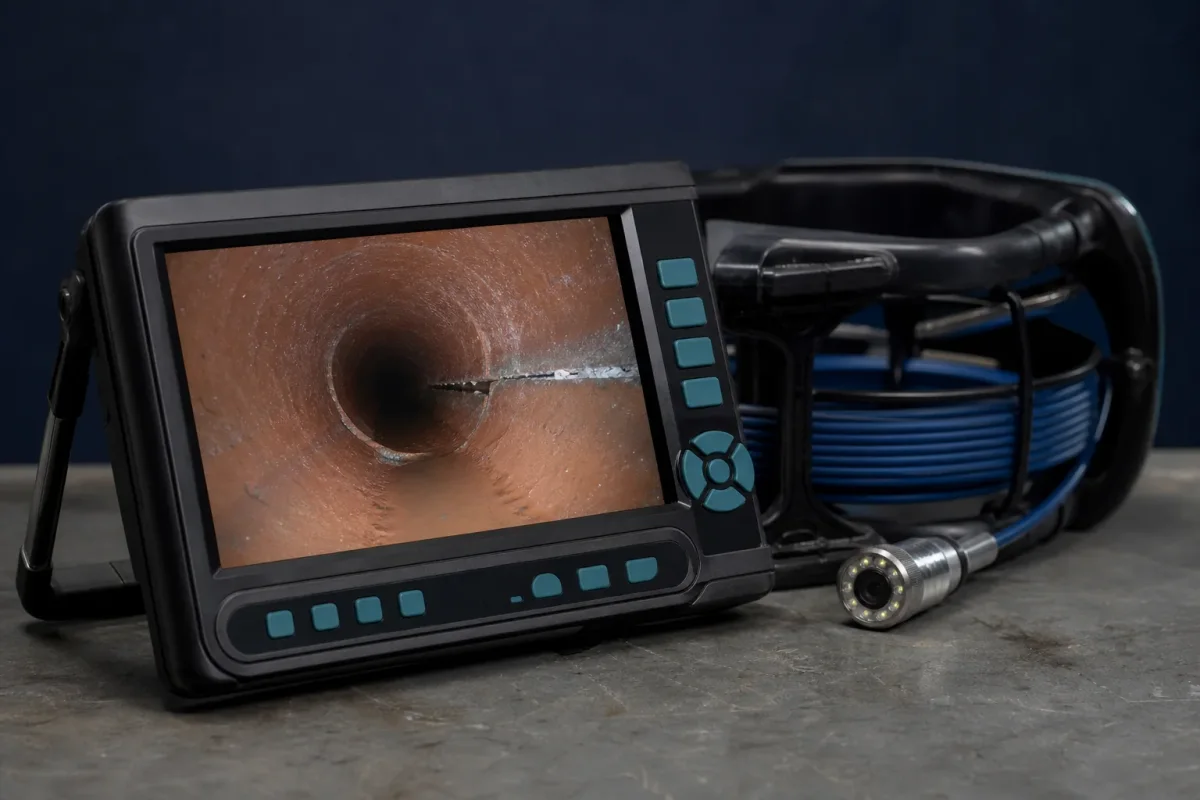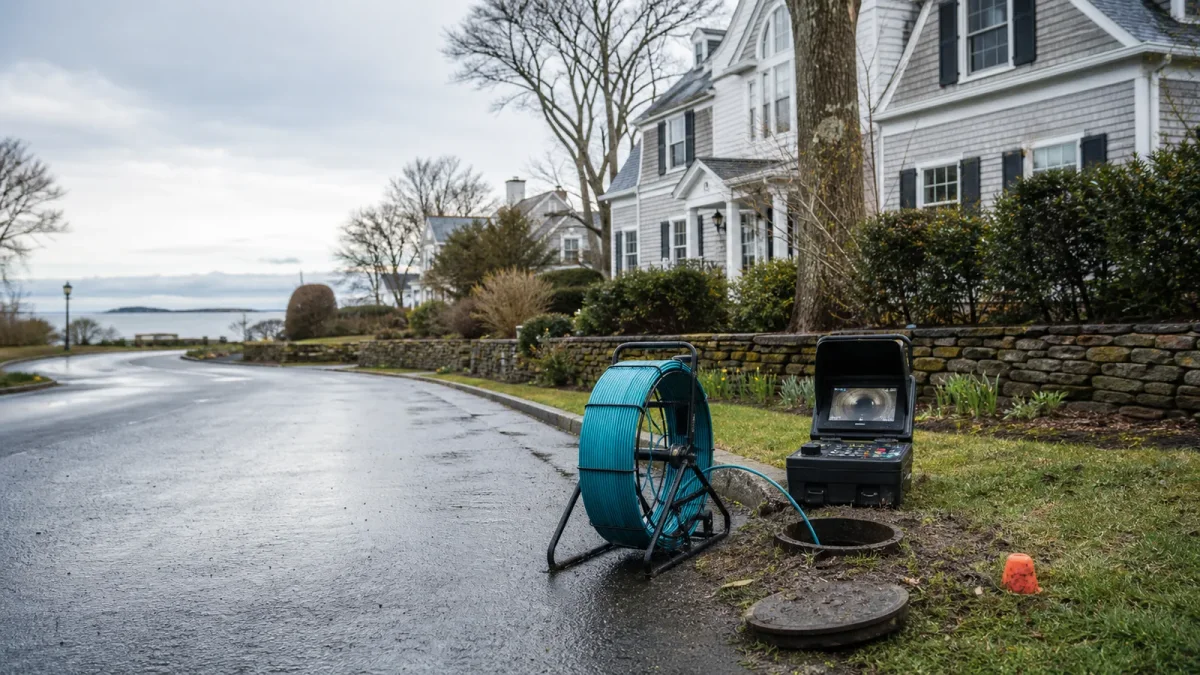
Fairfield Premier Trenchless verifies wastewater service at the address level because Fairfield County does not follow one town-wide pattern. Dense cities have public collection systems, some communities have limited sewer districts, and other towns rely primarily on private septic systems. A property near a district boundary can differ from a nearby parcel on the same road.
That distinction changes the language, inspection target, responsible records, and repair path. A public-sewer property normally has private building sewer or lateral piping leading toward a municipal connection. A septic property has building piping leading to a tank and soil treatment system. Calling both routes a city sewer line creates confusion before the camera is even inserted.
Start with documents tied to the parcel
Collect the current utility or sewer bill, seller disclosure, assessor and parcel records, prior permits, maintenance invoices, and any drawing showing the underground route. The current Connecticut residential disclosure form separately asks whether sewage disposal is public, septic, cesspool, or another type, but a checked box should still be compared with address-specific records and field evidence.
For a possible septic property, the Connecticut Department of Public Health septic guide explains that local health department files may contain permits, design plans, as-built drawings, and soil test data. Those documents can identify the tank and leaching area, show approved changes, and reveal whether a past repair altered the route.
For a possible public-sewer property, look for a municipal account, connection permit, assessment, or sewer authority record. A generic online map is useful for orientation, but service availability near a road does not prove that a particular building is connected.
Read the local pattern without turning it into an assumption
The coverage ledger records the first service question for each target community. Fairfield and Southport have municipal sewer infrastructure, while Easton and Weston require septic-first language. Wilton includes limited sewer service near its center and substantial septic territory outside it. Other towns mix districts, extensions, and private systems.
These patterns help identify the likely record holder. They do not replace parcel verification. A home can retain septic service after a sewer becomes available, or a prior owner may have connected later. An addition may also have changed the approved septic layout without changing what is visible from the street.
The safest working label is confirmed public sewer, confirmed septic, or unconfirmed. A quote should not quietly upgrade an assumption into a fact.
Confirm public sewer service with the right authority
For a public system, identify the water pollution control authority, sewer department, or utility that maintains the collection network. Ask whether the address has an active connection account and whether records show a connection permit or assessment. The Fairfield Sewer Department, for example, is the relevant municipal starting point for Fairfield and Southport addresses.
Then separate public infrastructure from private property piping. The municipality may maintain the main while the owner remains responsible for some or all of the building sewer or lateral. The exact responsibility point must come from the local rules and the property record, not a broad statement that everything to the street belongs to one party.
A bill supports the service classification but does not document the private pipe condition. Material, route, access, roots, corrosion, offsets, and prior repairs still require evidence. A sewer camera inspection can help map the private route when suitable access exists, but it should not be described as an inspection of a municipal main unless the scope and authority actually cover that asset.
Confirm septic service through health records and site evidence
Connecticut regulates smaller residential septic systems through local health authorities under state public-health standards. The Connecticut DPH subsurface sewage program provides the state framework, technical standards, and homeowner resources.
Ask the local health department for the property file. Useful items include the original design, as-built location, tank and leaching-area details, repair permits, soil information, pump records, and approvals for additions or changes in use. Compare that file with the current layout because decks, pools, garages, landscaping, and additions can affect access or indicate later work.
Field evidence can support the record review. Locate accessible tank covers, inspection ports, cleanouts, pumps, alarms, and the direction of the building sewer. Do not probe or excavate without an appropriate plan. A camera survey of the building sewer may show material and defects between the structure and tank, but it does not by itself evaluate the tank, distribution components, soil treatment area, or seasonal groundwater conditions.
Use the correct inspection boundary
On a public-sewer property, a private lateral inspection should state the access point, direction, distance reached, connection or stopping point, materials, diameter changes, and defects. It should note whether the public connection was visible and whether any trap or inaccessible turn limited the survey.
On a septic property, the route to the tank is only one component. The Connecticut home buyer’s septic guide recommends collecting system drawings, maintenance history, local health records, and direct examination of key components where permitted. Its guidance also warns that seasonal conditions can affect how a system appears, which is why a quick interior camera pass cannot stand in for a complete septic evaluation.
State the boundary in plain language. “Camera inspection from basement cleanout to accessible tank inlet” is more useful than “full sewer inspection” when the tank and leaching area were outside the scope.
Reconcile conflicts before pricing a repair
Documents can disagree. A disclosure may say septic while a sewer bill exists, an old as-built may not match the current yard, or a camera may reach a structure that the available plan does not identify. Treat that conflict as a finding.
Pause the method decision and ask the responsible authority to confirm the account or file. If additional locating, access work, or a separate septic inspection is needed, list it as the next step. Do not build a lining, bursting, or excavation proposal on an unverified endpoint.
Responsibility also needs confirmation. The property owner, municipal authority, health department, and contractor may each control different approvals or sections. The scope should identify who obtains permits, who coordinates with the authority, and which connection remains outside the work.
Keep one address-level evidence packet
Save the bill or service confirmation, disclosure, parcel and permit records, as-built or route sketch, maintenance history, full camera files, written inspection notes, and authority correspondence. If work proceeds, add permits, product or material records, photographs, and closing inspection evidence.
That packet prevents the service type from being rediscovered during every future maintenance call or property transaction. It also makes uncertainty visible. An absent record, inaccessible route, or unverified district boundary should remain labeled until someone with authority resolves it.
If the system type is still unclear after the document review, send the address-level evidence for review before choosing a trenchless method or requesting a repair price.
Common Questions
Can neighboring Fairfield County homes use different wastewater systems?
Yes. A sewer district boundary, a later connection, or a private septic lot can place nearby properties on different systems. Verify the individual parcel instead of relying on the street or town name.
Which record is best for confirming a septic system?
Local health department files may include permits, design plans, as-built drawings, soil data, and repair records. Compare those records with the disclosure and visible property evidence.
Does a sewer bill prove the entire private lateral condition?
No. A bill can support the service classification, but it does not show the private pipe's material, route, access, or defects. Those require records and, where appropriate, an inspection.
What if the documents conflict?
Keep the service type marked unconfirmed and ask the municipal sewer authority or local health department to reconcile the address. A proposal should not hide that uncertainty.