Fairfield Premier Trenchless treats CIPP lining and pipe bursting as different tools for different pipe conditions. Cured-in-place pipe creates a new pipe within an accessible host route. Pipe bursting fractures or displaces the old line while a new pipe is pulled through the path. Both can reduce long open trenches, but neither is a universal no-dig answer.
The right comparison starts with the same inspection record, the same property constraints, and the same definition of a finished job. Comparing a liner price that excludes preparation with a bursting price that includes pits and restoration does not reveal which method is better. It only reveals that the scopes were written differently.
Establish the defect and the full route first
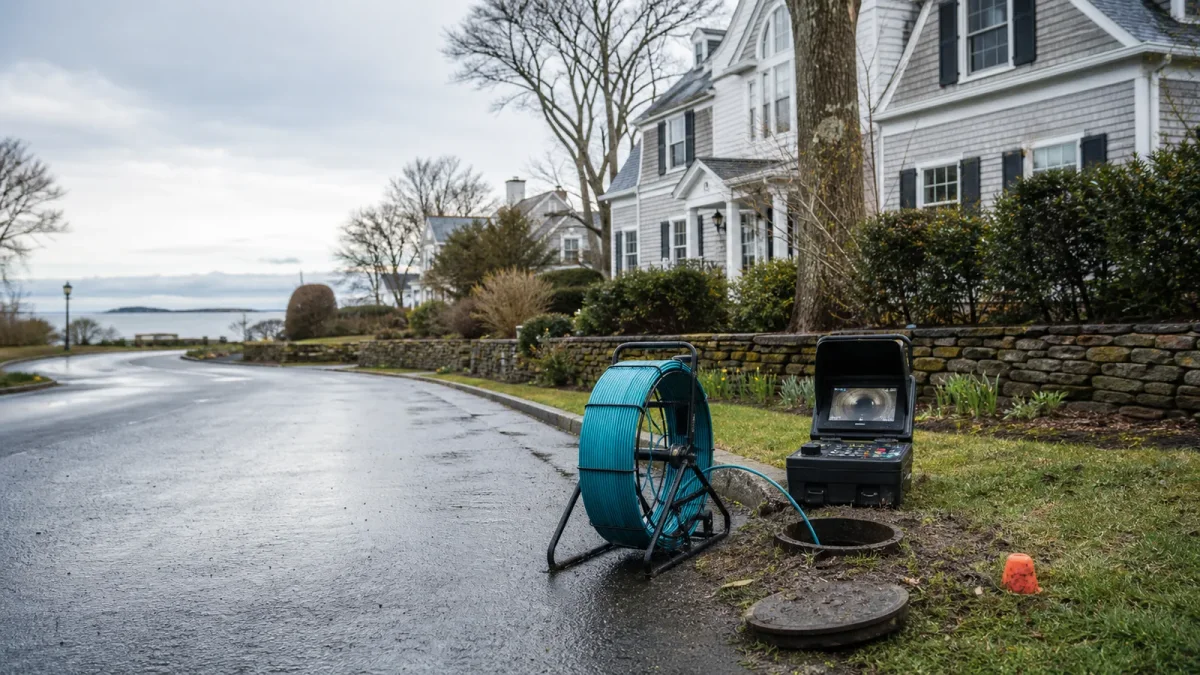
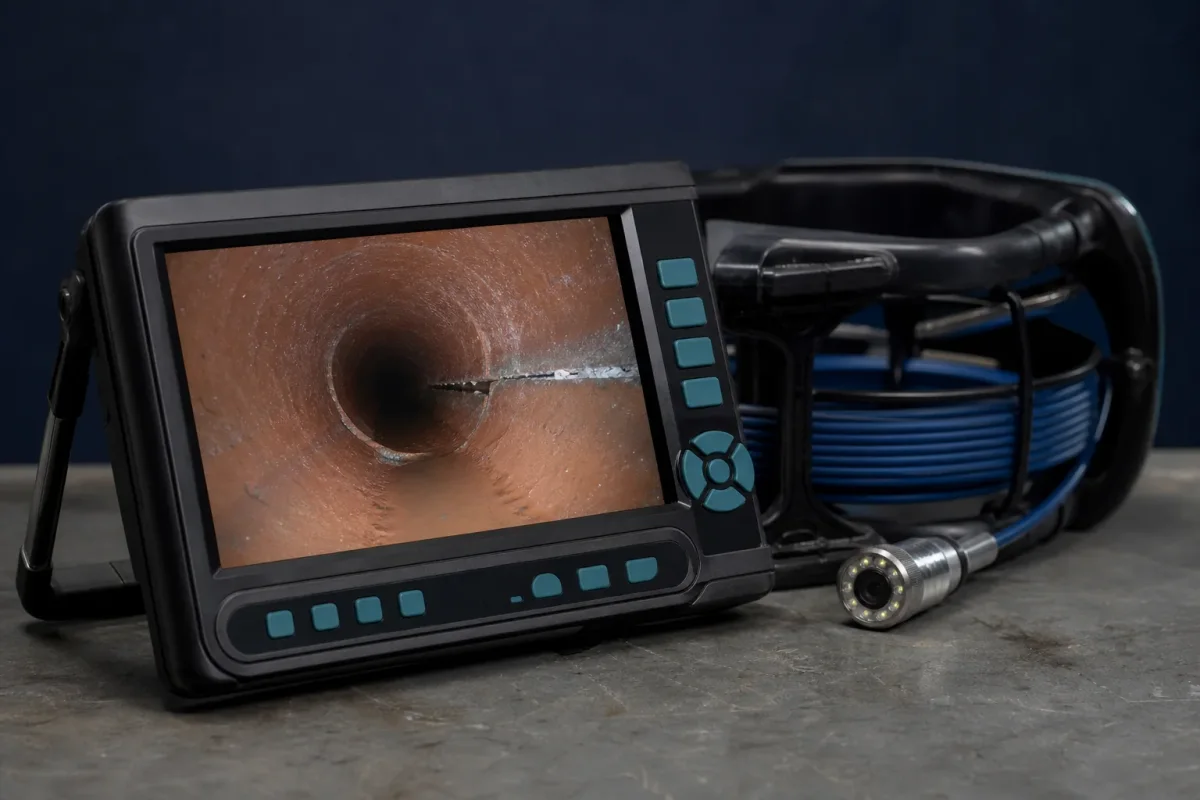
Begin with a continuous camera survey from a named access point. Record direction, distance, diameter, material, branches, fittings, transitions, roots, deposits, offsets, fractures, deformation, standing water, and the point where the camera stops. If the view is obscured, the scope should explain whether cleaning is safe and what additional pass will be used to inspect the prepared pipe.
NASSCO’s assessment guidance emphasizes consistent condition identification as the basis for deciding how to maintain or rehabilitate a pipe. That principle transfers directly to a private lateral: define the defects before selecting the product.
The survey also needs to cover the intended treatment length. A clear section near the cleanout does not prove the condition at a transition, foundation wall, property line, or public connection. If a collapse prevents the camera from reaching the rest of the line, the unknown portion should remain an explicit limitation.
CIPP lining depends on a usable host route
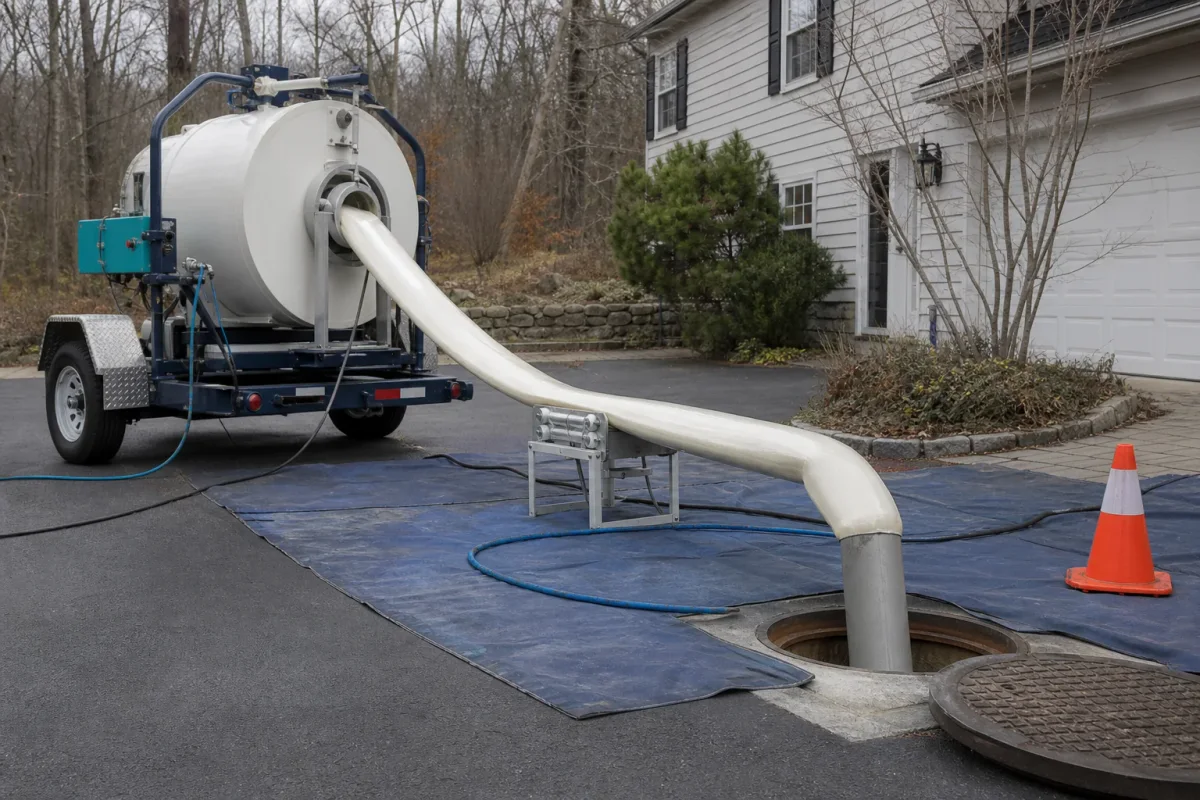
Trenchless pipe lining places and cures a resin-saturated tube inside the prepared pipe. The ASTM F1216 description identifies this as reconstruction of a pipeline through installation of a resin-impregnated tube that cures into a continuous, tight-fitting pipe. The scope therefore needs more than the word lining. It should identify the system, dimensions, design basis, preparation, installation method, curing process, connection treatment, and final verification.
The host route has to be accessible enough for cleaning and installation. Severe deformation, a missing section, a tight trap, an abrupt diameter change, or an impassable offset can stop the process or require a preliminary spot repair. The installer also needs a plan for active branches and fittings.
CIPP follows the existing alignment. It can bridge joints and isolate the new flow surface from a deteriorated wall when the design and conditions support that use, but it does not lift an existing belly into a new grade. If standing water is visible, ask what additional evidence supports the recommendation and how the finished liner will behave at that location.
Pipe bursting installs a replacement through the old path
Pipe bursting uses a head to break or displace the existing material while pulling a new pipe behind it. It can be considered when the existing pipe cannot serve as a continuous host for lining, or when replacement and a new pipe material are the clearer objective.
The method normally needs a launch point and a receiving point. The exact access can be small compared with a continuous trench, but it is still excavation that must be located, protected, and restored. Landscaping, pavement, walls, ledge, groundwater, neighboring property, and the position of the building all affect whether those points are practical.
The route must also be evaluated for bends, changes in diameter, nearby utilities, and required separation. A pull path that is simple on a plan may be constrained in the field. The proposal should state how utilities are located, how the route is confirmed, and what condition would require a method change.
Connections and grade can decide the method
Private laterals may include branches, cleanouts, traps, transitions, and a final connection to a public sewer or septic tank. A method comparison is incomplete until those features are mapped. Ask which connections fall within the work, how they will be protected or reopened, and how the closing camera pass will confirm flow through the treated route.
Grade deserves separate attention. A moving camera can show water, but it cannot by itself provide a precise elevation survey or reveal the soil outside the pipe. CIPP preserves the host route. Bursting replaces the pipe along a pull path, but the actual ability to change grade depends on access, excavation, and site geometry. Any promise to correct slope should be tied to measurements and a written installation plan.
For a local offset or isolated failure, a sewer spot repair may be evaluated before or instead of treating the entire run. The defect map should determine the length of work, not the convenience of a package.
Compare disruption as a complete property plan
The phrase trenchless can hide different kinds of site work. For CIPP, include cleaning equipment, water and debris handling, access preparation, curing equipment, odor or ventilation planning, connection reopening, and downtime. For bursting, include pits, excavation support, material staging, pulling equipment, utility protection, connection work, backfill, compaction, and restoration.
Surface value matters in Fairfield County because a short access pit may avoid a longer cut across established landscaping, a driveway, or a finished interior. That does not mean one method always wins. A liner may need an access correction, and a burst may place pits in low-impact locations. Put the proposed access points on a sketch and compare what will actually be disturbed.
Permits and inspections should be listed, along with who obtains them and what public-side coordination is excluded. Downtime should be stated in practical terms, including whether occupants or businesses need a bypass plan.
Compare price only after normalizing the scope
Use the same checklist for both quotes:
- pre-work cleaning and camera evidence;
- exact treatment length, diameter, and material;
- access work and surface restoration;
- branch, fitting, and transition treatment;
- utility locating and permit responsibility;
- material, design, curing, or installation records;
- wastewater service interruption and contingency planning;
- final camera footage and written closeout.
The sewer repair cost guide explains why access, length, material, preparation, and restoration can move the total more than the product label. An allowance should be identified as an allowance, and an excluded item should not be assumed to be included elsewhere.
Require a closing record for either method
Keep the original camera file and written defect map. After the work, retain the material and design records, permit or inspection documents, photos of access and connections, and a final camera pass through the completed segment. The closing video should identify the same reference points and confirm that intended connections are open.
If a section remains unseen, record it. If the method changed after preparation or excavation, update the final scope so the property file reflects what was actually installed.
Use the sewer camera inspection guide to organize existing footage, then request a method comparison based on the complete route rather than a single still image.
Common Questions
Is pipe bursting always more disruptive than CIPP lining?
Bursting usually needs launch and receiving access, while CIPP often uses existing access points. Actual disruption depends on pit locations, utilities, connections, surface restoration, and the route through the property.
Can CIPP lining repair a sewer belly?
A liner follows the host pipe route and should not be represented as automatically correcting grade. Standing water on video requires a clear explanation of the cause, limits of the inspection, and what the proposed method will change.
Can pipe bursting work through bends?
Bends, fittings, diameter changes, utilities, and available pull paths can limit bursting. The route and access points should be evaluated before it is proposed as a replacement method.
What should both proposals include?
Compare cleaning, access, connection work, permits, downtime, surface restoration, material and design records, and pre-work and post-work camera evidence, not only the method price.