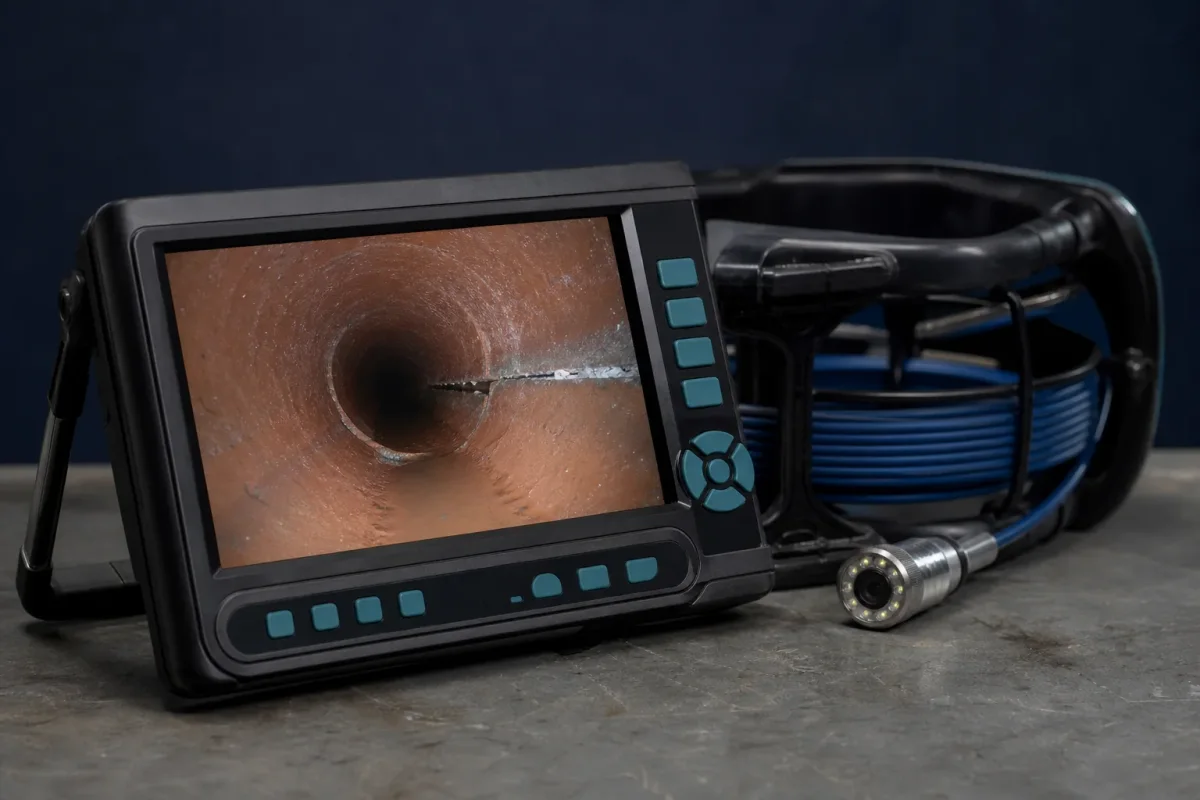
Fairfield Premier Trenchless reads sewer camera footage as a sequence of located observations. A dramatic still can show a root mass, fracture, offset, or area of standing water, but it does not establish the length of the defect, the condition on either side, or whether cleaning would change the view. The full recording and a written defect map are what turn imagery into a repair decision.
Establish the inspection route before naming defects
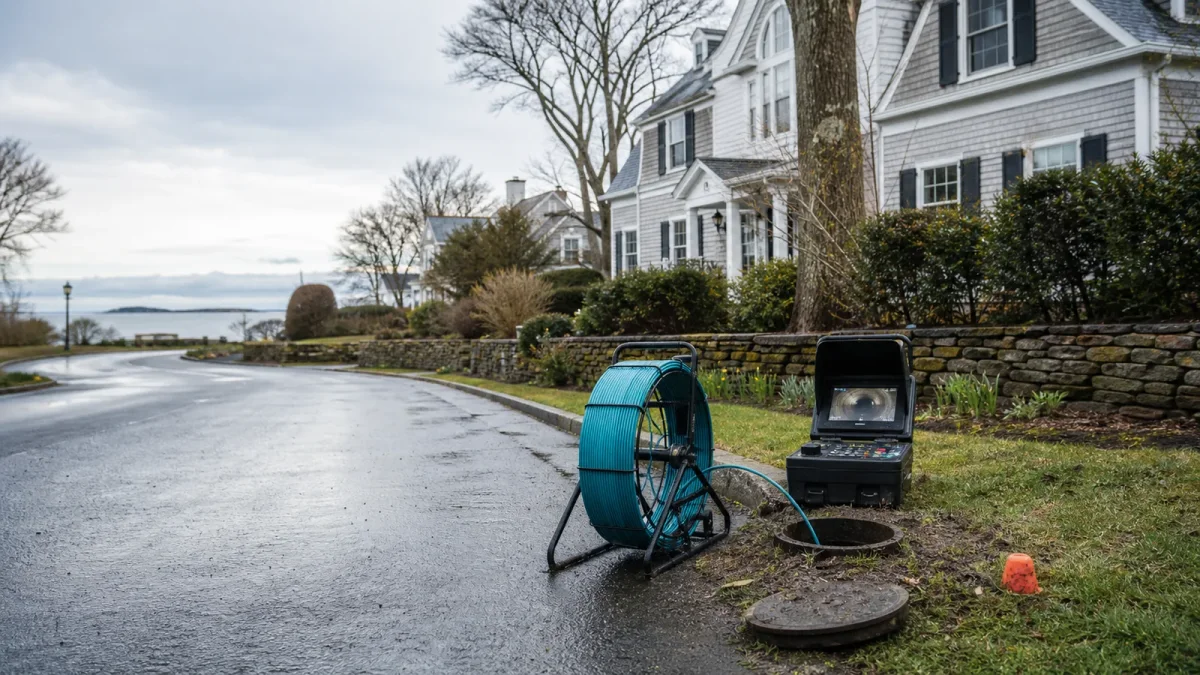
Write down the property address, date, access point, direction of travel, and the position used as distance zero. Identify whether the camera entered from a basement cleanout, exterior cleanout, pulled fixture, roof vent, septic access, or another point. The route matters because two inspections can show the same pipe from opposite directions and produce very different distance numbers.
Record starting diameter and material, then note every visible transition. Cast iron, clay, Orangeburg, PVC, ABS, and repair fittings can appear in one lateral. A change in color or texture is not enough to identify material confidently, so combine the footage with permits, building records, and exposed components when available.
NASSCO’s building sewer and drain inspection program focuses on a consistent inspection approach, reporting, and condition codes for building sewers and drains. That structure is useful even when reviewing an ordinary residential video: identify what was seen, where it was seen, and how certain the observation is.
Build a distance-based defect map
Create a simple table with distance, material, feature, condition, and note. Include joints, fittings, branches, cleanouts, traps, diameter changes, roots, deposits, corrosion, cracks, fractures, holes, deformation, offsets, standing water, and the final connection or stopping point.
Separate features from defects. A material transition or wye may be normal, while an open joint or intruding connection can require attention. Separate maintenance conditions from structural conditions too. Grease, roots, and settled debris can obstruct flow without proving that the surrounding pipe must be replaced.
Consistent categories make comparisons easier. NASSCO’s PACP, LACP, and MACP programs were created so infrastructure observations can be recorded in a common language. A private-lateral report may be simpler, but terms should still be defined rather than used as interchangeable labels.
Distinguish what the camera shows from what it suggests
A camera directly shows the visible interior at the moment of the survey. It can document a root intrusion, an offset joint, corrosion texture, a broken edge, deposits, standing water, or a point that cannot be passed. It does not see the exterior wall, soil voids, bedding, nearby utilities, groundwater outside the pipe, or the hidden run beyond a collapse.
Standing water deserves careful wording. It may be consistent with a belly, an obstruction, a temporary flow condition, or the way the camera is moving. Video alone does not measure exact slope. If grade controls the repair decision, ask what measurements or access observations support the conclusion.
The same caution applies to corrosion. Scale can conceal the remaining cast iron wall. A dark line can be a stain, joint, crack, or camera artifact depending on focus and lighting. Pause, center the camera where possible, and record uncertainty instead of forcing a diagnosis from one frame.
Use cleaning as a controlled diagnostic step
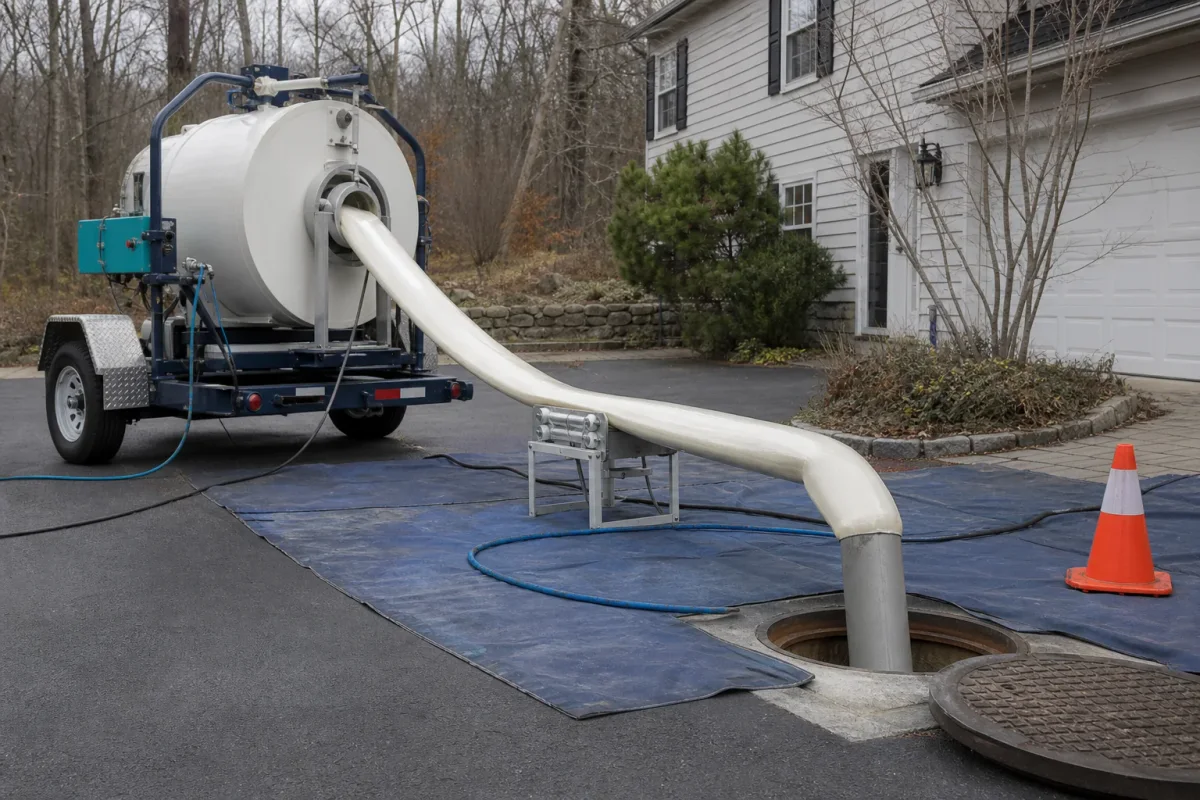
If grease, scale, roots, or debris hide the surface, the initial video may be a screening pass. The written plan should state whether hydro jetting, mechanical cleaning, root cutting, or another preparation method is appropriate for the material and suspected condition.
Cleaning should have a stop condition. A fragile or deformed pipe may not tolerate the same preparation as an intact line. Removing an obstruction does not automatically solve the underlying entry point, and aggressive work should not be used simply to create a clearer video without considering the wall.
Run a second survey through the same route after preparation. Compare distances and reference points with the original. This can reveal wall loss, open joints, fractures, or geometry that deposits concealed, and it can also show that an alarming restriction was mainly removable buildup.
Match the observation to a method, not a product pitch
Once the defect map is complete, group conditions by the decision they create. A continuous, accessible route with a defined rehabilitation need may be evaluated for trenchless pipe lining. A collapsed or severely deformed segment may lead to pipe bursting, a sewer spot repair, or open replacement depending on access and the full route.
Roots are a condition and a cause question. Cutting can restore an opening, but the report should identify the joint, fracture, or connection through which roots entered and explain whether the proposed work treats that location.
Offsets also need scale and context. Record how much of the opening appears displaced, whether the camera can pass, what lies on both sides, and whether flow is affected. Do not turn every visible joint change into the same repair recommendation.
Read the stopping point as part of the result
An inspection is not complete merely because the recording ends. Note whether the camera reached the public connection, septic tank, property line, obstruction, trap, collapse, or equipment limit. If the stopping point is uncertain, keep it uncertain.
An inaccessible cleanout, tight bend, blocked trap, or collapsed section may require another access point or a preliminary repair before the remaining run can be evaluated. That limitation can be commercially important because the unseen section may change length, method, permits, or restoration.
For a purchase decision, a partial inspection should not be presented as a clear full-length result. The pre-purchase sewer inspection guide lists the records and closing evidence that help a buyer compare the buried-line risk before a contingency expires.
Preserve the original and closing evidence
Keep the full video file at its original quality, not only screenshots or a compressed message attachment. Pair it with the route description, defect map, cleaning notes, and any permit or material records used to identify the system.
After repair, request a closing pass that covers the treated segment and uses the same reference points. It should show intended branches or connections open and should identify any untreated defect or remaining unseen section. A short polished clip is not a substitute for the complete route.
Use a clear filename that includes the property, date, and whether the file is pre-cleaning, post-cleaning, or post-repair. This makes later comparison possible without relying on memory.
If an existing video lacks a starting point, distances, or material transitions, send the full recording for review and list those gaps before accepting a repair scope.
Common Questions
Can sewer camera video measure the exact slope of a pipe?
A camera can show standing water and changes in the visible flow path, but video alone is not a precise elevation survey and cannot reveal the soil supporting the pipe.
Should a sewer line be cleaned before a final diagnosis?
When deposits or debris hide the wall and cleaning is appropriate for the pipe condition, a post-cleaning pass can separate removable obstruction from structural damage. The scope should define the safe preparation method.
Why does the distance counter need a starting point?
A number on screen is useful only when zero is tied to a named access point and direction. Otherwise a repair location cannot be reliably transferred from video to the property.
What should a post-repair camera inspection show?
It should cover the treated segment, identify the same reference points, show intended connections open, and make any remaining limits or untreated defects clear.