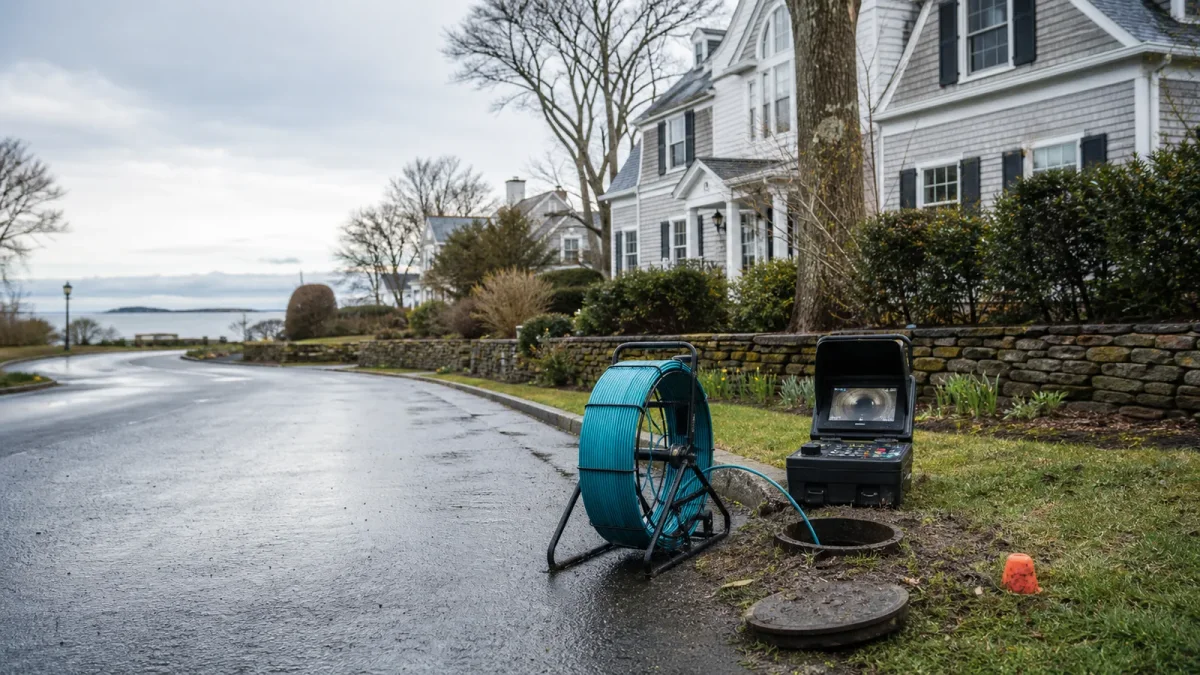
A driveway catch basin that overflows during rain can point to a blocked or damaged drain, but it can also reflect a restricted outlet or a surface drainage problem. Fairfield Premier Trenchless starts storm drain pipe repair with the actual drainage route. A camera survey, access review, and connection map help separate a repairable pipe defect from a broader collection or discharge issue.
Stormwater piping needs its own assessment. Roof leaders, yard drains, catch basins, and private drainage laterals do not automatically share the same destination. Before cleaning or rehabilitation, establish what enters the pipe, where it discharges, and who controls each affected segment. A sanitary sewer repair recommendation should not be carried over to an unidentified storm drain.
Match Rainfall Symptoms to the Collection Route
Ask when the overflow begins, which inlets are affected, and how long water remains after rain stops. Photograph surface ponding from a safe position and mark the affected basin or drain on a sketch. These observations help target the inspection without proving a cause on their own.
Check accessible grates and inlet openings for leaves, sediment, and debris. A blocked grate can prevent water from entering an otherwise usable pipe. A damaged basin wall or failed connection may let soil enter the route even when the grate is clear. Document the inlet structure alongside the buried lateral so the repair scope does not overlook the source of recurring sediment.
If only one branch backs up, inspect that branch and its connection. If several inlets surcharge together, the common downstream pipe or outlet needs attention. A dry-weather inspection may reveal structural condition while leaving wet-weather performance questions unresolved. State that limitation rather than promising that one repair will eliminate all ponding.
Camera Findings for Crushed Sections and Root Entry
A camera inspection should identify access, direction, distances, pipe dimensions, material changes, bends, branches, and the discharge endpoint if reachable. Record cracks, displaced joints, root entry, deformation, debris, and standing water. Tie significant stations to surface locations where practical so proposed access can be reviewed against landscaping and pavement.
Crushed or severely deformed pipe may prevent both inspection and cleaning equipment from advancing. The report should show where travel stopped and distinguish that confirmed obstruction from the unseen downstream section. An access excavation may be necessary before the rest of the route can be evaluated.
Roots require more than a label on the video. Record whether they enter at one joint, several joints, a fracture, or a basin connection. The distribution determines whether a localized repair can address the problem or whether a longer rehabilitation scope deserves comparison.
Clean Sediment Without Losing the Evidence
Cleaning should suit the pipe material, recorded condition, access, and receiving system. Fragile or damaged piping requires caution before aggressive cutting or jetting. Discuss hydro jetting only after the operator understands the route and has a plan for controlling and collecting dislodged material.
Sediment removed from a pipe should not simply be pushed into an unknown outlet. Identify where debris can be captured, how basin contents will be handled, and whether downstream access is available. Cleaning a private lateral does not authorize work on a public drain or discharge of debris into receiving waters.
Inspect again once the wall is visible. The prepared-pipe video may reveal a fracture or offset hidden beneath deposits. Keep both recordings so the owner can distinguish the original blockage from the structural findings that support the repair recommendation.
When Stormwater CIPP Lining Can Fit
Trenchless pipe lining may be evaluated when the host is accessible, cleanable, and geometrically suitable for a designed liner. The proposal should identify the affected segment, dimensions, intended structural role, installation access, curing approach, and treatment of connected branches.
A liner follows the host route. It does not automatically correct a sag, increase drainage capacity, or resolve an undersized inlet. Ask how the finished internal dimensions and connection details will affect the intended drainage function. Any hydraulic claim should be supported by an assessment appropriate to the system rather than a general promise about smooth pipe walls.
Stormwater flow can interrupt preparation and installation. The plan should address weather, incoming branches, temporary drainage control, and conditions that would postpone work. Equipment placement and curing access also need to be shown, particularly where the drain passes beneath a driveway or beside a retaining wall.
Sectional Spot Repair Versus Local Excavation
A bounded crack or leaking joint between sound sections may support sectional spot repair. The scope should state the defect station, repair length, overlap onto suitable pipe, and how the finished section will be inspected. Confirm that no branch or fitting will be unintentionally covered.
A crushed section, failed fitting, or badly displaced joint may instead require direct access and replacement. Excavation can also be needed where the pipe must be reset to a suitable alignment. Compare access and restoration against the consequence of leaving the underlying geometry unchanged.
Pipe bursting is a separate replacement evaluation when route, material, utilities, and pit locations support it. It should not be assumed feasible through every bend or connection. A method comparison should explain why the proposed option addresses the recorded storm drain defect.
Outlet, Ownership, and Discharge Constraints
Locate the downstream endpoint before defining success. An outlet covered by sediment, damaged by erosion, or restricted by another structure may keep an otherwise repaired pipe from draining. Where the endpoint cannot be reached or observed, identify what remains unknown and what further investigation is needed.
Confirm responsibility for private drains, shared infrastructure, and public connections. Ask the relevant authority about current approval requirements if work affects a right of way, regulated area, or discharge arrangement. Do not assume a buried connection is authorized merely because it already exists.
Keep stormwater and wastewater observations separate. If the inspection raises concerns about an unexpected connection, pause the method decision until the route and appropriate response are established. For sanitary symptoms, use the separate sewer line repair and replacement guide.
Scope, Restoration, and Completion Evidence
| Scope item | Detail to request |
|---|---|
| Inspection | Named access, footage, defect stations, endpoint reached |
| Preparation | Root cutting, sediment collection, basin cleaning |
| Repair | Method, dimensions, length, branch treatment |
| Site protection | Equipment route, pits, pavement, plantings |
| Drainage control | Weather conditions and temporary flow arrangements |
| Completion | Closing video, connection review, accessible flow observations |
Length, depth, preparation, access, and restoration all influence the proposal. The Fairfield County cost-drivers guide explains how to compare scope components, although a stormwater route needs its own diagnosis and discharge review.
Retain before-and-after footage, a sketch of the treated segment, material information, inspection records, and restoration responsibilities. A closing camera pass documents the installed repair; it does not prove performance during every future storm. State any remaining inlet, capacity, or outlet concerns in the final record. Send the town, rainfall symptoms, and available footage to start a drainage-specific review.
Decision check
Questions a useful recommendation should answer
01What material, diameter, and defects appear on the camera footage?
02What preparation is required before the proposed method can work?
03Which alternatives were ruled out, and why?
04What closing evidence and written scope will the property owner keep?
Questions
Frequently asked
01Can a storm drain be lined?
A suitable accessible host may support lining after cleaning and inspection. Collapse, severe deformation, grade problems, and unsuitable connections can require another approach.
02Does removing roots finish the repair?
Cleaning may restore flow, but the entry point and remaining pipe condition determine whether structural repair is needed.
03Will pipe repair solve every flooded yard?
No. Inlet condition, grading, outlet restrictions, and system capacity may also contribute. Repair should address a documented pipe defect within a defined drainage system.