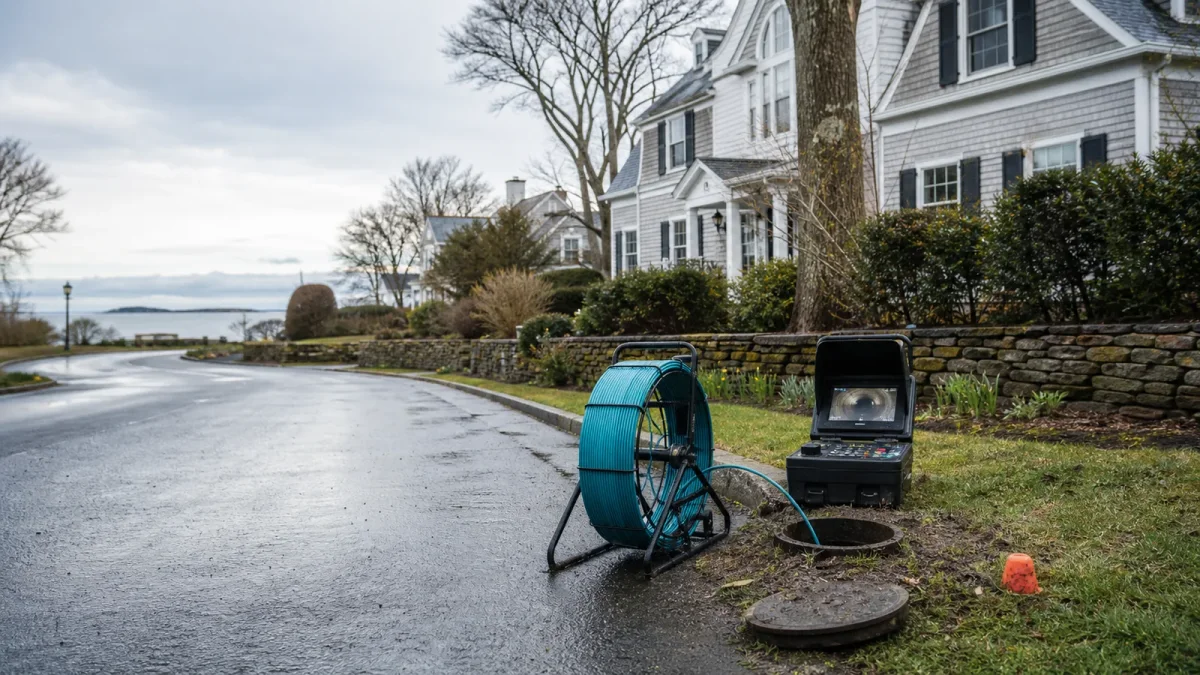
Fairfield Premier Trenchless publishes evidence-led planning guides for buried sewer and drain work. This page explains where under-slab sewer repair may fit, what should be documented first, and which conditions can change the recommendation.
Locate the Defect Before Opening the Slab
Under-slab drainage requires precise locating because access, structure, utilities, finishes, and branch connections can matter as much as the damaged pipe.
A method should follow the recorded condition of the line. Age, symptoms, or a single camera still do not replace a complete scope.
Camera Distance, Locator, Branch, and Structure Evidence
- Camera distance and electronic locating
- Slab plan and nearby utilities where available
- Material, diameter, branches, and defect type
- Access from outside or existing openings
The recording should be kept with the written proposal. If a contractor cannot reach the full connection, the report should identify where the survey stopped and why. For recurring symptoms, cleaning may be needed before a camera can show the pipe wall clearly.
Where Internal Lining or Targeted Access Fits
Internal lining or a targeted access repair can fit some defects when the route and branches are documented.
The proposal should connect each major scope item to a finding. That includes preparation, the repair segment, access, service interruption, surface protection, and closing verification. Properties in Fairfield County also differ by public sewer availability, private septic connections, groundwater, ledge, and building age.
Grade, Missing Pipe, and Inaccessible Fittings
A grade problem, missing section, inaccessible fitting, or unsuitable host geometry can still require slab access.
Ask whether a localized repair, broader rehabilitation, replacement, or conventional access was considered. A good comparison states what is excluded as clearly as what is included.
Locate, Protect, Access or Line, Close, and Verify
- Confirm the system. Establish whether the line is a private sewer lateral, building drain, septic connection, water service, or another pipe.
- Open and clean the path. Remove the obstruction or deposits needed for a useful survey.
- Record and locate defects. Tie the camera view to distance, access, material, and property features.
- Compare viable methods. Review preparation, access, downtime, restoration, and proof at completion.
- Verify the result. Retain closing footage and a written record of the repaired segment.
A sewer camera inspection is commonly the starting point. If the host remains usable, trenchless pipe lining may be compared. If replacement is necessary, pipe bursting may be considered where the route and access permit it.
Interior Protection, Access, Repair, and Finish Cost Drivers
The planning ranges published on the Fairfield sewer repair cost guide are broad. A property-specific number can change with length, depth, diameter, material, cleaning, access, traffic control, groundwater, permits, interior protection, and restoration.
Request a scope that states:
| Scope item | What to confirm |
|---|---|
| Inspection | Length reached, recording, defect distances |
| Preparation | Cleaning, descaling, roots, access |
| Repair | Method, product or pipe, segment, connections |
| Site work | Pits, interior access, protection, restoration |
| Verification | Closing footage, testing, records |
| Exclusions | Municipal work, hidden conditions, unrelated piping |
Questions About Structural Access and Restoration
- Which recorded defect is this method intended to address?
- What condition would stop or change the work after it begins?
- Who handles permits, utility marking, access, and restoration?
- How long will fixtures or building operations be interrupted?
- Which videos, product records, and inspection documents will the owner receive?
For a property-specific conversation, send the town, symptoms, and any existing camera findings.
Decision check
Questions a useful recommendation should answer
01What material, diameter, and defects appear on the camera footage?
02What preparation is required before the proposed method can work?
03Which alternatives were ruled out, and why?
04What closing evidence and written scope will the property owner keep?
Questions
Frequently asked
01Can under-slab pipe always be lined from outside?
No. Access, bends, branches, host condition, and the selected system determine feasibility.
02How is the defect located?
Camera distance and a compatible locator are commonly used, then checked against the building layout.
03What should restoration include?
The scope should state who opens and closes finishes, handles dust and contents, and restores the slab or flooring.